
Bni Mririt Rug
A Masterpiece of Moroccan Amazigh Heritage
The Bni Mririt rug is among the most prestigious expressions of Moroccan textile artistry. Originating in the Middle Atlas Mountains, it reflects centuries of Amazigh craftsmanship where technique, symbolism, and environment merge into a singular work of art. Known for its exceptional density, refined geometry, and luxurious softness, the Bni Mririt rug embodies both structural precision and cultural storytelling.
Entirely handmade, each rug requires patience measured not in hours but in weeks or months. The weaving process preserves ancestral knowledge transmitted through generations of artisans. Every knot contributes not only to durability and texture, but also to a deeper cultural continuity that defines Amazigh identity and artistic heritage.
The Traditional Production Process
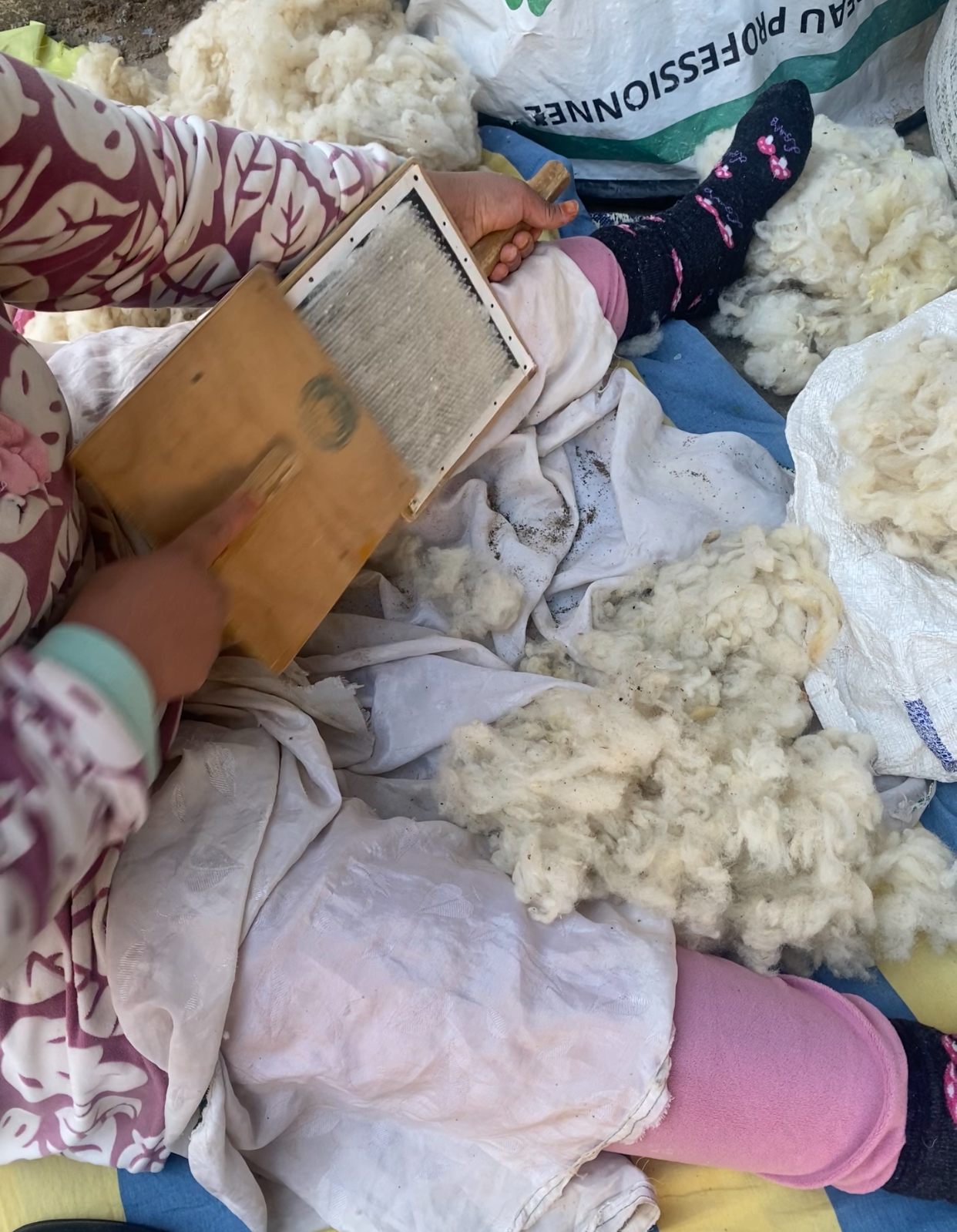
- Raw Material Collection: Mountain Sheep Shearing The creation begins with the ethical shearing of mountain sheep, producing one hundred percent natural wool renowned for its resilience and warmth. The high-altitude climate of the Atlas Mountains contributes to the wool’s density and softness, forming the essential foundation of the rug’s luxurious pile.

- Wool Preparation: Cleansing, Combing and Spinning After washing to remove natural impurities, the fibers are carefully combed and aligned. Artisans then hand-spin the wool into consistent yarn using traditional tools. This meticulous stage ensures strength, uniform thickness, and the supple quality characteristic of Bni Mririt rugs.
- Natural Dyeing: Chromatic Authenticity The yarn is dyed using mineral and plant-based pigments rooted in ancestral knowledge. These natural tones develop subtle variations and depth, allowing the rug to mature beautifully over time. The restrained color palette often emphasizes ivories, warm neutrals, and charcoal contrasts.

- Loom Preparation: Structural Framework The loom, known as mansaj, is assembled according to the intended dimensions of the rug. This stage determines alignment, tension, and proportional balance. Whether metal for large formats or wood for smaller pieces, the loom establishes the architectural integrity of the textile.
- Thread Alignment: Structural Harmony, ASNLI NIRA Threads are tensioned and aligned with precision to ensure symmetry and density. This preparation guarantees that the knots will sit evenly, contributing to the refined surface and durability of the finished rug.
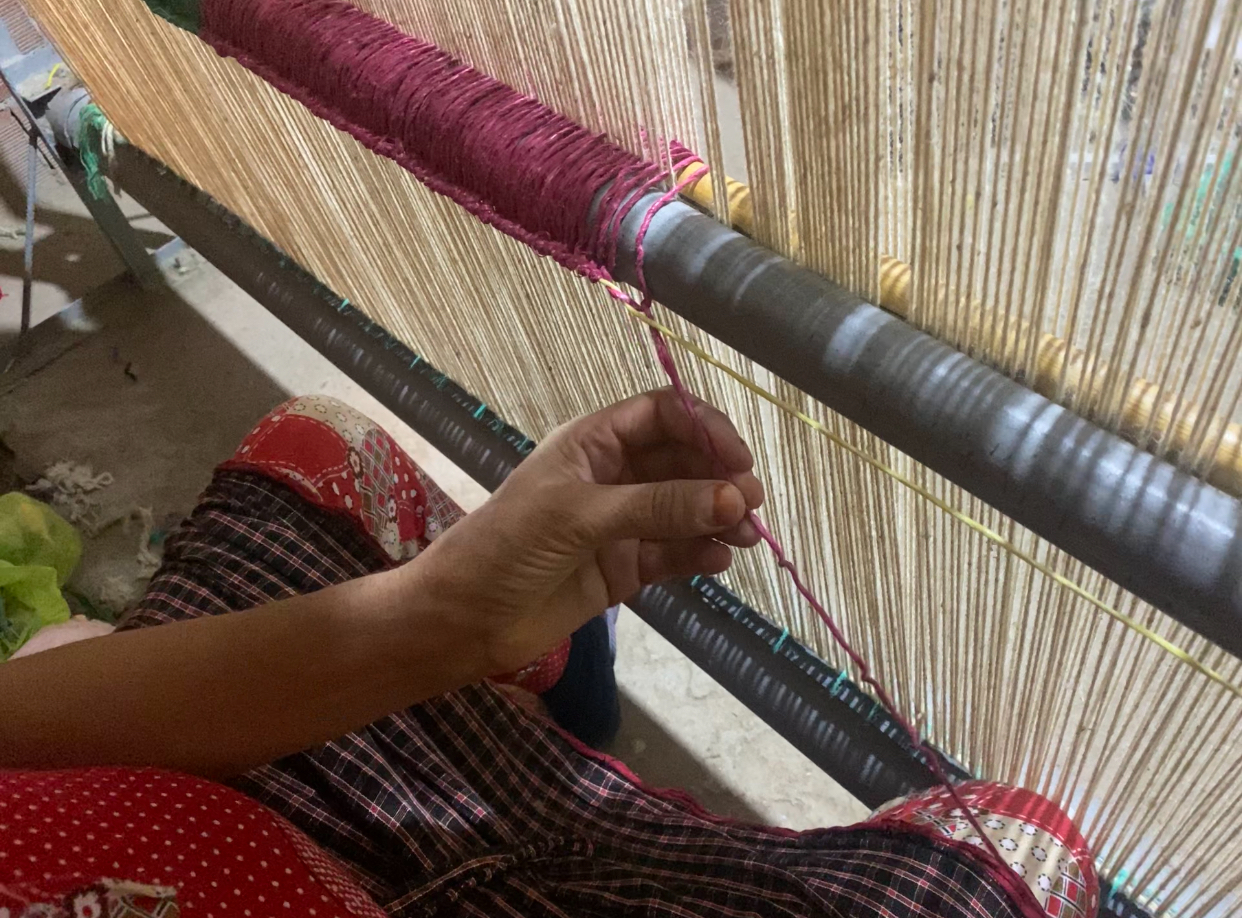
- Flat Weaving: Foundational Base A compact flat-woven base is created first, forming the structural skeleton that supports the knotted pile. This foundation enhances stability and longevity.

- Pile Weaving: Knot-by-Knot Craftsmanship The defining stage involves hand-knotting each strand individually. The density achieved in Bni Mririt rugs is exceptional, creating a velvety texture and precise geometric compositions. Depending on size and intricacy, this process may extend over several months.

- Finishing: Removal and Fringe Crafting Once weaving is complete, the rug is carefully detached from the loom. Fringes are braided or hand-finished to reinforce the structure while preserving aesthetic harmony.

- Washing and Fiber Refinement The rug is washed using natural soap and water to remove excess dye and refine the pile. This stage enhances softness and reveals the depth of color variations within the wool.

- Sun Drying and Final Adjustment Laid beneath the Moroccan sun, the rug dries naturally. Sunlight deepens tonal nuances and further softens the texture, contributing to the rug’s luminous finish.
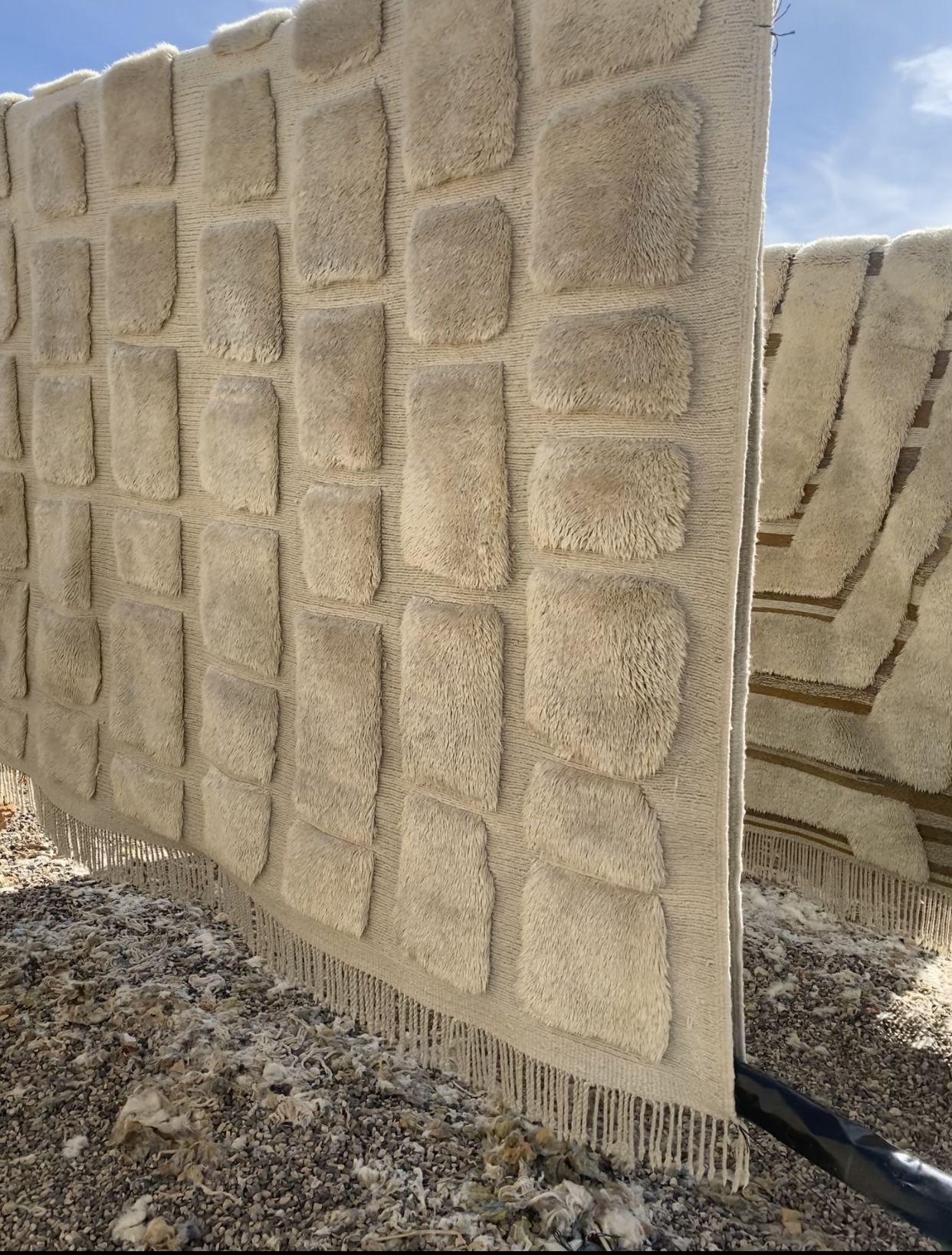
- Quality Control Each rug undergoes a detailed inspection to verify density, symmetry, edge finishing, and overall structural excellence. Only pieces meeting high artisanal standards are approved.
- Presentation and International Delivery Finally, the rug is carefully prepared for transport, ensuring that its texture, structure, and craftsmanship are preserved as it journeys from the Atlas Mountains to homes around the world.

Our Rugs in Clients’ Interiors


A Living Cultural Legacy
More than a decorative object, the Bni Mririt rug represents a refined balance between heritage, technique, and artistic identity. Its dense structure, restrained palette, and geometric clarity allow it to complement both contemporary and classical interiors. Above all, it remains a testament to Amazigh craftsmanship, a tradition sustained through patience, discipline, and deep cultural pride.