
1. Introduction: How Moroccan Rugs Are Made
How are your rugs handmade, and who makes them?
Benbrahim rugs are handwoven by Amazigh women on traditional wooden looms. Each piece is created slowly, knot by knot, using techniques passed down through generations. Artisans work without printed patterns, guided by memory, creativity, and symbolism. The wool is washed, brushed, and spun by hand, so every rug carries the maker’s identity, story, and artistry.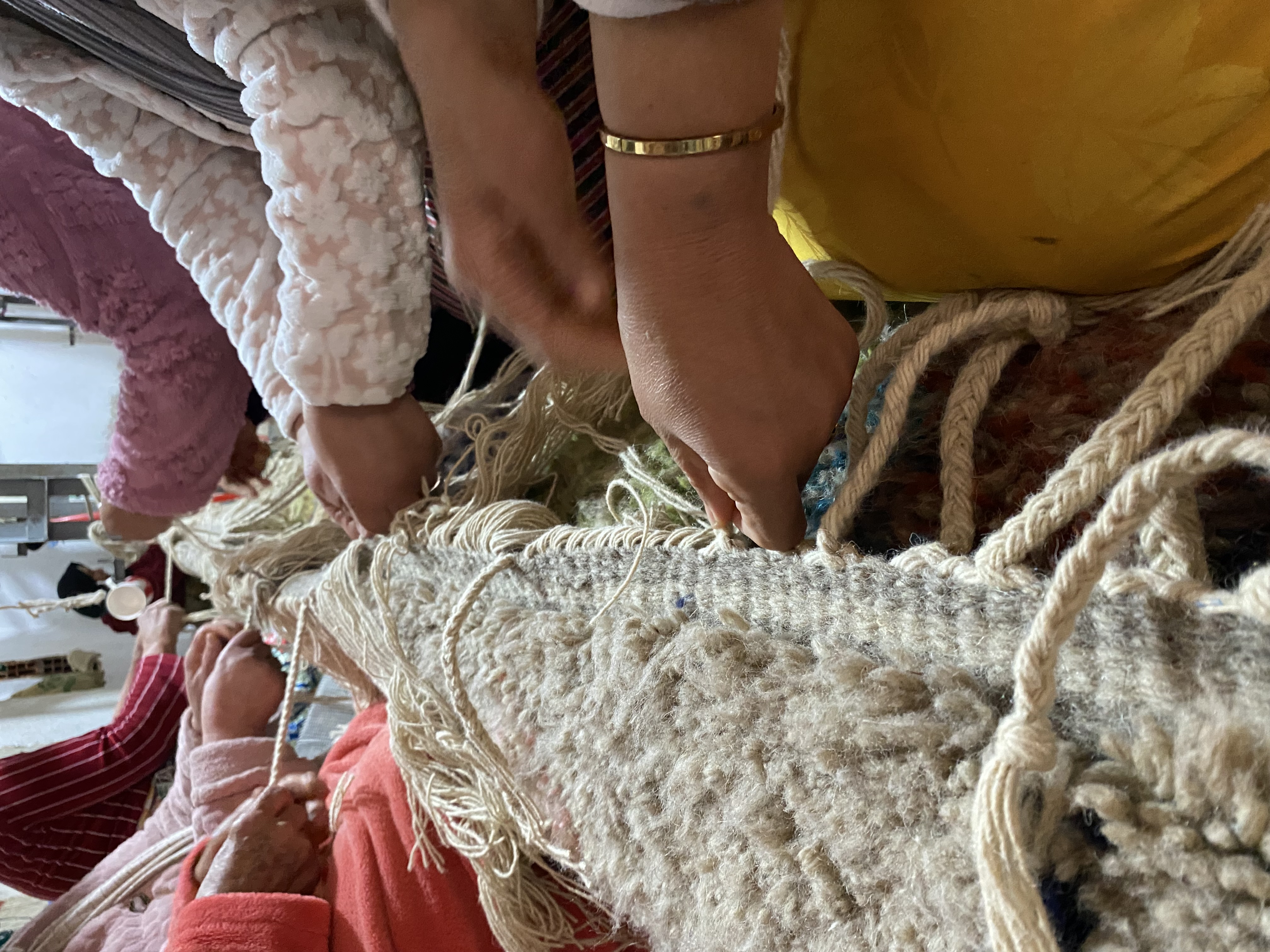
How long does one rug take to make?
Depending on size, design complexity, and construction, a rug can take from three weeks to six months. This may take longer if changes occur during production. High pile rugs require more knots and time, and larger rugs are often woven by two or three women together. The pace follows the artisan’s daily life, which keeps the process human, careful, and never rushed.
Why are Moroccan rugs unique?
They are valued for their authenticity, natural materials, and cultural depth. Many designs feature Amazigh symbols linked to protection, nature, or family. Untreated wool and natural dyes give warmth and character. Because each piece is handmade, no two rugs are ever exactly the same.
2. Material: 100 Percent Wool
What wool do you use?
Our rugs are woven from Atlas Mountain sheep wool. It is naturally thick, soft, and rich in lanolin, which provides strength, sheen, and durability.
How does wool feel underfoot?
Soft, warm, and comfortably cushioned. High pile feels plush and enveloping, while flatweaves feel lighter and smoother. Wool adapts to room temperature and becomes softer over time.
Is wool durable?
Yes. Wool is one of the strongest natural fibers. It resists crushing, repels moisture, and keeps its beauty for many years with simple care.
Does wool shed?
Light shedding at the beginning is normal and settles with use. As the rug is used, the surface becomes smoother and softer.
How do I care for wool?
Vacuum weekly on low suction, clean spills immediately, rotate the rug from time to time, and avoid prolonged direct sunlight. A professional wash once a year helps keep it fresh and bright.
3. Weaves and Constructions
What is the difference between flatweave, low pile, medium pile, and high pile?Each weave type offers a different balance of texture, comfort, and practicality:
- Flatweave: thin, light, and very easy to clean
- Low pile: smooth, practical, and low maintenance
- Medium pile: soft with a balanced structure
- High pile: thick, plush, and warm
Which weave is easiest to maintain?
Flatweave and low pile are the easiest for everyday life, especially in busy spaces.
Which is the softest?
High pile offers the softest and most luxurious feel underfoot.
Which suits warm or cool climates?
Flatweaves are ideal in warmer climates, while high pile is perfect for cooler rooms. Medium and low pile work well all year round.
4. Iconic Moroccan Styles
What defines Beni Ourain, Beni Mrirt, Azilal, Boujad, Boucherouite, Kilim, and Zanafi rugs?
- Beni Ourain: Ivory wool, black lines, thick pile
- Beni Mrirt: Luxurious natural wool, neutral tones, refined Amazigh geometric or free patterns, and a silky feel
- Azilal: Cream base with lively, colorful motifs
- Boujad: Warm terracotta and pink tones with tribal patterns
- Boucherouite: Recycled textiles in bold, playful patchwork
- Kilim: Flatwoven, lightweight, and geometric
- Zanafi: Flatweave with raised braided details, often in black and white
Which styles fit modern or bohemian interiors?
Beni Ourain suits minimal and contemporary interiors. Azilal and Boujad are ideal for bohemian and artistic spaces. Kilim and Zanafi pair beautifully with modern or monochrome decor. Boucherouite adds a playful, creative touch anywhere.
Which styles are thickest?
Beni Ourain is usually the thickest and fluffiest. Some Azilal rugs also come in medium to high pile.
Traditional colors and motifs?
Motifs often evoke nature, femininity, protection, or tribal identity. Colors range from soft neutrals to rich, vibrant tones, depending on the region and dyes used.
5. Texture and Feel
How soft and warm are wool rugs?
Wool rugs feel naturally soft and warm, making them ideal for barefoot living. High pile brings plush depth, while flatweaves feel smooth and light.
Does the texture change?
Yes. Wool softens and the pile relaxes over time, adding character without losing quality.
Is it good for barefoot comfort or layering?
Perfect for both. High pile is wonderful in bedrooms and cozy corners. Flatweaves are excellent for layering and creating a textured, modern look.
6. Durability
Are wool rugs good for homes with pets or kids?
Yes. Wool is resilient, naturally hides dirt, and springs back into shape. Flatweave and low pile are especially practical for active households.
Do they resist stains?
Wool contains lanolin, a natural oil that helps repel liquids and slows absorption. This makes spills easier to manage when treated quickly.
Which types handle high traffic best?
Flatweave and low pile rugs are best for hallways, entrances, and busy living rooms.
How long do they last?
With good care, a handmade wool rug can last 20 to 40 years or more and often becomes a piece to pass down.
7. Design Guide
Can I ask for any design I want?
Yes. You’re free to choose any design, image, or drawing as inspiration. However, due to the handmade nature of our rugs, sharp lines, fine details, and perfectly identical or symmetrical shapes cannot be reproduced exactly as in the original reference. Our artisans translate your inspiration into the best possible woven version, staying true to the spirit of the design.
Corners and borders may not be perfectly symmetrical and can appear slightly irregular. This is a natural characteristic of hand-knotted rugs and part of their unique, authentic charm.
Please also note that some sophisticated or highly vibrant colors may appear softer in the final rug. Our wool is naturally dyed and hand-colored, so slight variations in shade can occur. Additionally, during washing and sun-drying, colors may subtly evolve, making each piece truly one of a kind.
Why do some handmade rugs show slight irregularities in their patterns?
Handwoven rugs are living works of art, and subtle irregularities such as gentle pattern shifts, stray lines, or slightly uneven shapes are a natural part of their beauty. These details are not flaws, but signatures of authentic craftsmanship.
In Amazigh weaving traditions, such variations reflect the belief that perfection belongs only to nature and the divine, a philosophy similar to the Japanese concept of wabi-sabi, which celebrates beauty in imperfection. While some variations occur naturally during weaving, artisans intentionally choose not to correct them, as doing so would disrupt the rhythm of the loom. Preserved as part of the rug’s story, these details make every piece truly unique and unmistakably handmade.
8. Size Guide
What size works best in living rooms?
Common sizes are 400×300 cm, 300×200 cm, or 240×160 cm. For a balanced look, the front legs of the sofa should rest on the rug.
What about bedrooms and hallways?
Bedrooms: 200×140 cm beside the bed or 300×200 cm under it
Hallways: runners between 250 and 300 cm
How much furniture should sit on the rug?
At least the front legs of larger pieces for visual balance. Dining tables should sit fully on the rug so chairs can move comfortably.
Can I order a custom size?
Yes. We can create custom sizes, colors, and proportions tailored to your space while maintaining the same handmade quality. Please note that exact measurements may vary slightly by a few centimeters due to natural wool movement during weaving, washing, and drying.
9. Care and Maintenance
How often should I vacuum?
Once a week on low suction is enough. Avoid harsh brush rollers that can pull the fibers.
How do I clean spills?
Blot immediately with a clean cloth, use cold water, avoid rubbing, and let the rug air-dry naturally.
Should I use a rug pad?
Yes. A rug pad improves stability and comfort and helps protect both the rug and the floor.
How often should it be professionally washed?
Every 12 to 18 months, depending on how much traffic the rug receives.
10. Buying Tips
Why do handmade wool rugs shed?
Natural wool releases some loose fibers at first. This reduces over time and does not affect the rug’s strength or quality.
Why might colors vary between photos and reality?
Lighting, screens, and natural dye variations can make colors look slightly different. These small shifts are part of the charm of handmade pieces.
Are rugs truly one of a kind?
Yes. Each rug is woven by hand without rigid templates, so patterns and details vary from piece to piece.
How can I recognize a real handmade rug?
Look for gentle irregularities on the back, hand-finished edges, and the natural weight and feel of wool. Machine-made rugs tend to look very flat, even, and perfectly uniform.